Car Safety Features Every Houston Family Should Consider
A practical guide to advanced safety systems and family car safety technology that matters most for Houston drivers navigating freeways, floods, and traffic.

If you're shopping for a family vehicle in Houston, the safety conversation has changed dramatically in the last few years. It's no longer just about airbags and anti-lock brakes. Today's vehicle safety technology actively scans the road, watches your blind spots, and in many cases steps in before you even realize there's a problem. For families navigating the Katy Freeway at rush hour, dodging flooded underpasses after a Gulf storm, or carpooling kids through Cypress and the Energy Corridor, those features aren't luxuries — they're the difference between a close call and a claim.
Here's a clear-eyed look at the safety features Houston families should prioritize, why they matter specifically in our market, and how to evaluate them when you're walking a dealership lot.
Why Houston Driving Demands More From Safety Technology
Houston is one of the most demanding driving environments in the country. We log some of the longest commute times in Texas, share the road with heavy freight traffic on I-10 and 290, and contend with weather that swings from blistering heat to sudden torrential downpours. Add construction zones around the Grand Parkway expansion and school-zone congestion in suburbs like Cypress, Tomball, and Spring, and you have a recipe for the kinds of low-speed and high-speed incidents that advanced safety systems are designed to prevent.
Hurricane season — roughly June through November — also reshapes how families think about vehicles. Wet-weather handling, visibility in heavy rain, and the ability to detect hazards in low-contrast conditions all become non-negotiable. The good news: the safety tech available in 2026 model-year vehicles addresses these scenarios directly.
The Core Advanced Safety Systems Worth Prioritizing
When we talk with families at Volkswagen Cypress, we steer the conversation toward the features that actually move the needle on real-world crash prevention. Here are the systems that should be on your shortlist.
Automatic Emergency Braking (AEB) with Pedestrian Detection
AEB uses forward-facing radar and cameras to detect an imminent collision and apply the brakes if you don't react in time. The pedestrian-detection layer is especially relevant in neighborhoods with heavy foot traffic — think the Heights, Rice Village, or any school zone in Cy-Fair ISD during pickup hours. This is the single feature with the strongest documented impact on rear-end and pedestrian crashes.
Blind Spot Monitoring and Rear Cross-Traffic Alert
Houston's wide multi-lane freeways and aggressive merging culture make blind-spot monitoring genuinely useful, not gimmicky. Rear cross-traffic alert is the companion feature you'll appreciate every time you back out of a packed parking lot at Memorial City Mall or a strip center off 1960.
Adaptive Cruise Control with Stop-and-Go
If your daily route includes the 610 Loop, I-45, or the Sam Houston Tollway, adaptive cruise that can bring the vehicle to a full stop and resume in traffic isn't a comfort feature — it's a fatigue-reduction feature. Tired drivers cause crashes. Tech that maintains a safe following distance for 45 minutes of stop-and-go traffic helps keep your reaction time sharp for the moments that matter.
Lane Keeping Assist and Lane Departure Warning
On long stretches of Highway 290 or the Westpark Tollway, lane-keeping technology gently corrects drift. For parents driving home after a long workday with kids in the back, that subtle steering input is a meaningful safety net.
360-Degree Camera Systems
Three-row SUVs are a fixture of the Houston family fleet, and parking them in tight spots — downtown garages, the Galleria, school drop-off lines — is genuinely difficult without a top-down view. A 360-camera isn't just convenient; it prevents the low-speed incidents that drive up insurance premiums.
Rear Occupant Alert
Texas summers are unforgiving. Interior temperatures in a parked car can climb past 130°F within minutes. Rear occupant alert systems remind drivers to check the back seat before locking up. For families with infants or pets, this is non-negotiable.
Family Car Safety Beyond the Tech Package
Advanced driver-assistance systems get the headlines, but family car safety is a layered concept. A few things to evaluate alongside the tech sheet:
- IIHS and NHTSA crash ratings: Look for Top Safety Pick or Top Safety Pick+ designations from the Insurance Institute for Highway Safety, and 5-star NHTSA ratings.
- LATCH system accessibility: If you're installing car seats, the ease of access to lower anchors matters more than spec sheets suggest.
- Outward visibility: Sleek rooflines look great until you're trying to see a cyclist on Shepherd Drive. Sit in the driver's seat and check sightlines yourself.
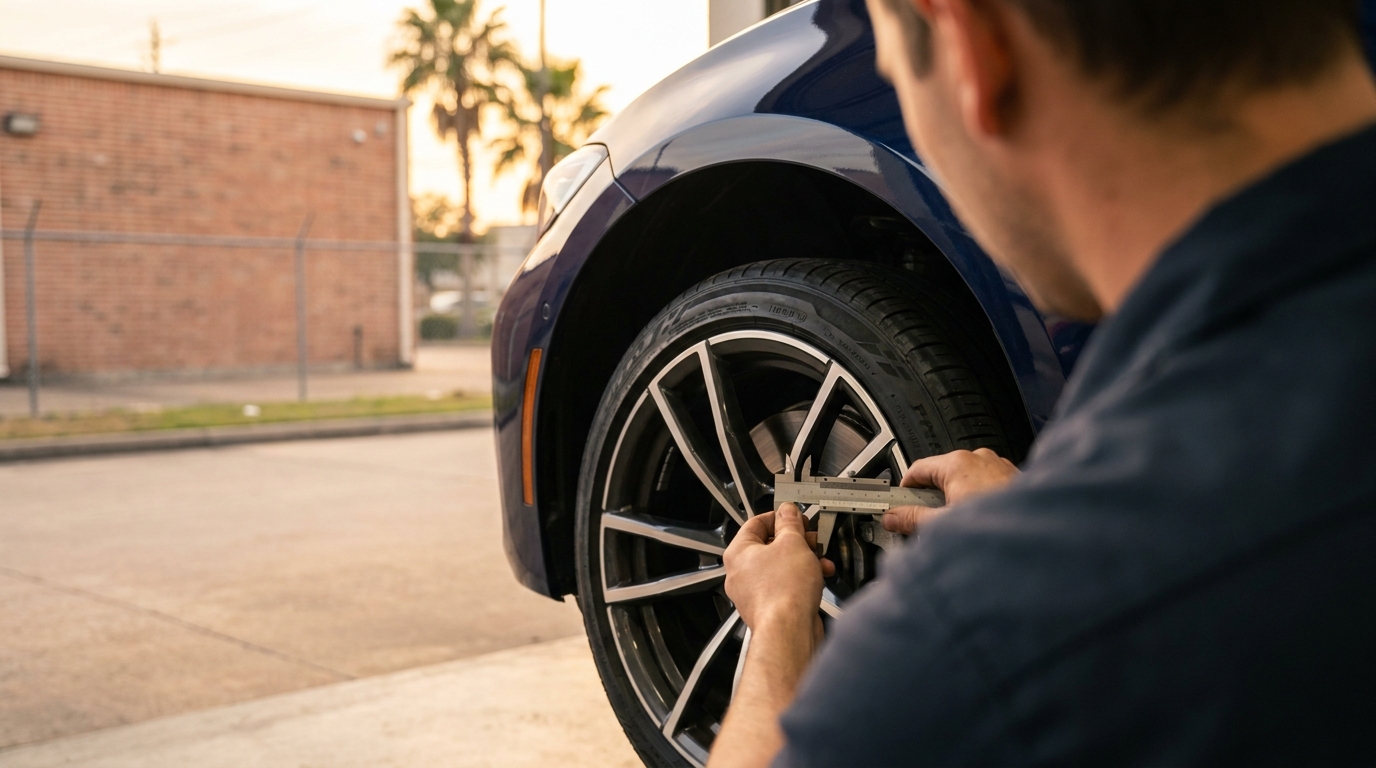
- Tire and braking performance in wet conditions: Houston's flash-flood reality means hydroplaning resistance and braking distance on wet pavement deserve real attention.
- Structural design: Reinforced safety cages, side-impact beams, and crumple-zone engineering still do most of the work when a crash happens.
How to Evaluate Safety Features at the Dealership
Spec sheets only tell you so much. When you're test-driving, do this:
- Test the adaptive cruise on a real freeway, not the dealer's side street. Get on 290 or the Tollway and feel how it manages traffic.
- Trigger the blind-spot alert intentionally by signaling toward a vehicle in the next lane. You should see and hear the warning clearly.
- Check the camera resolution in bright Houston sun — washed-out screens are common in older systems.
- Ask which features are standard versus trim-locked. Some manufacturers include the full safety suite across all trims; others reserve key features for higher packages.
- Confirm software update policy. Modern safety systems improve via over-the-air updates. Ask how the manufacturer handles them.
Frequently Asked Questions
Are advanced safety features worth the added cost on a family vehicle?
For most families, yes. The features that prevent crashes — AEB, blind-spot monitoring, lane-keeping — also tend to reduce insurance premiums and preserve resale value. Over a typical ownership period, the math usually favors the better-equipped trim.
Do these systems work reliably in heavy Houston rain?Most modern systems perform well in moderate rain but can throttle back in extreme downpours when sensors are obscured. Treat them as a backup to attentive driving, not a replacement. Keep cameras and radar sensors clean — debris from our pollen-heavy springs can interfere with detection.What's the most overlooked safety feature for Houston families?
Rear occupant alert and 360-degree cameras get less attention than they deserve. The first prevents a tragedy that happens in Texas every summer. The second prevents the low-speed parking-lot incidents that quietly account for a significant share of family-vehicle damage.
How do I know if a used vehicle has working safety systems?
Ask for a pre-purchase inspection that specifically tests ADAS calibration. Sensors knocked out of alignment by a minor fender-bender may not trigger a warning light but can perform poorly. Reputable dealers will document the calibration status before delivery.
Finding the Right Family Vehicle in Houston
Safety-conscious shopping works best when you're not rushed. Walk the lot, sit in the back seat, install your car seat, drive the vehicle on the roads you actually use. The right family vehicle should feel reassuring, not just impressive.
Houston families who want to compare advanced safety systems across current Volkswagen models — including the Atlas, Atlas Cross Sport, Tiguan, and Taos — can visit Volkswagen Cypress at vwcypress.com or stop by the showroom in Cypress. One reviewer recently described the experience as feeling like part of "the Volkswagen family," and that low-pressure, question-friendly approach is what we aim for with every family that walks in. Whether you're cross-shopping three-row SUVs or stepping up from a sedan, our team can walk you through which safety features come standard, which are optional, and how each one performs in real Houston driving conditions.