Oil Change in Houston, TX: Why Your Interval Shifts
Houston heat, traffic idling, and short suburban trips shorten oil life. Here's how to reset your oil change interval for real Houston driving conditions.

If you drive in Houston, your oil change interval is almost certainly shorter than the number on your windshield sticker or the one printed in your owner's manual. For most gasoline-engine Volkswagens and other modern cars driven in the Houston metro, plan on synthetic oil changes every 5,000 miles or six months — not the 7,500 to 10,000 miles the manual quotes for "normal" service. Houston driving is "severe service" under nearly every manufacturer's own definition.
That single reframe — from normal to severe — explains why two identical cars, one in Houston and one in a mild inland market, can show very different oil condition at the same mileage. Below is what actually causes the gap, and how to service around it.
Why does Houston driving shorten the oil change interval?
Three Houston-specific conditions compress oil life: sustained heat and humidity that push under-hood temperatures higher for more months of the year, heavy stop-and-go idling on I-10, US-290, the 610 Loop, and the Katy Freeway, and short suburban trips from places like Katy, Cypress, Sugar Land, and Pearland that never let the engine burn off moisture. Together they meet the manufacturer's own "severe service" definition.
Heat is the biggest single factor. Oil oxidation roughly doubles for every 18°F rise in sustained operating temperature, and Houston sees 90°F+ ambient highs from roughly late May through September — often longer. Add asphalt radiating heat back into a stopped engine bay on the Katy Freeway at 5:45 p.m., and the oil in your pan is working harder than the odometer suggests.
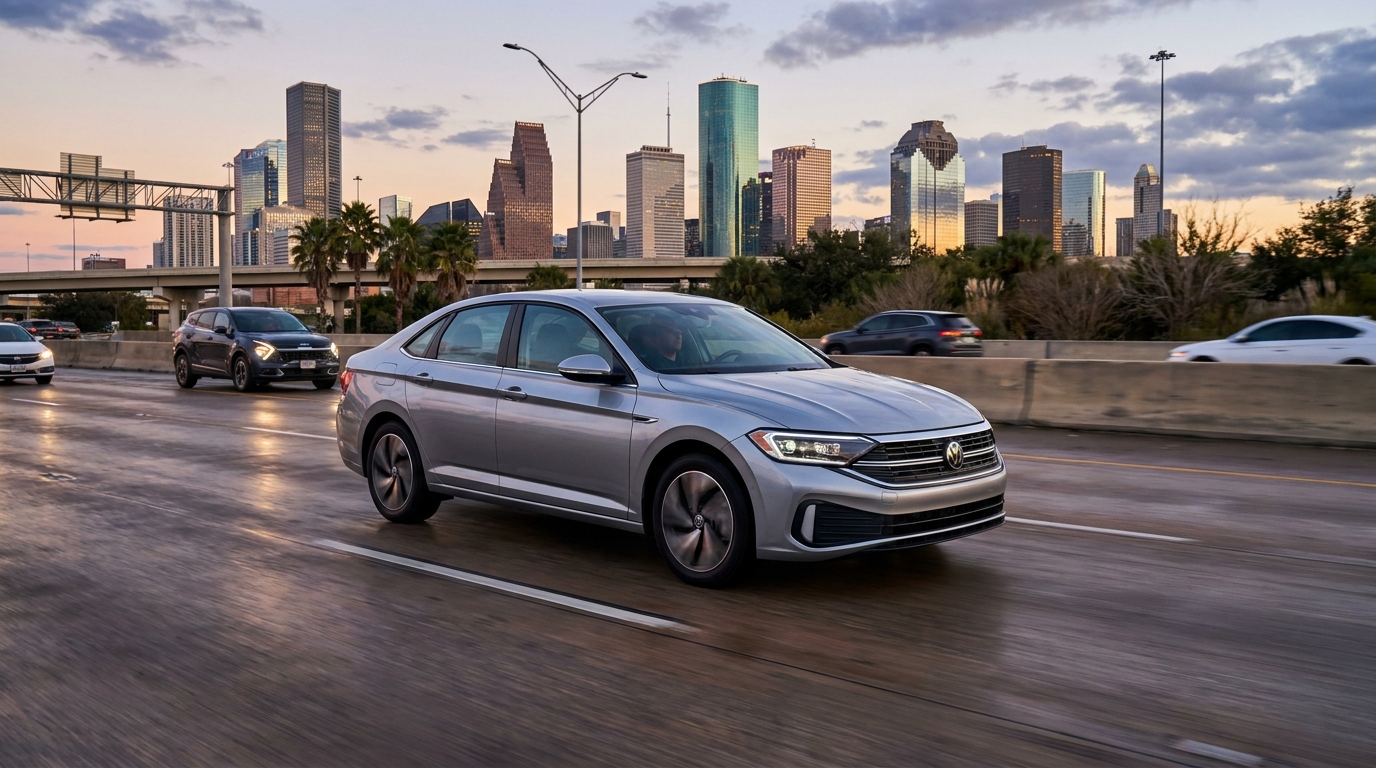
Idling doesn't add miles, but it does add engine hours. A car crawling from the Energy Corridor to The Woodlands can rack up an hour of engine runtime for 12 miles of odometer travel. The oil ages on time and temperature, not just distance.
Short trips are the quiet killer. A five-mile run from a Cypress subdivision to a grocery store rarely gets the oil hot enough to boil off condensed water and unburned fuel. Those contaminants stay in the sump, thin the oil, and accelerate acid buildup — which is exactly why manufacturers flag repeated short trips as severe service.
What interval should Houston drivers actually use in 2026?
For most late-model Volkswagens running the factory-spec 0W-20 or 5W-30 full synthetic, the practical Houston interval is 5,000 miles or 6 months, whichever comes first. Diesel TDI models and cars using VW 508.00/509.00 low-viscosity oils have their own service windows and should follow the in-dash service reminder plus a technician's inspection of oil condition.
The service team at Volkswagen Cypress sees the difference on the dipstick. Cars driven mostly on the Grand Parkway between Cypress and Katy at highway speeds hold their oil well to the manual's interval. Cars driven inside the Loop, or commuting daily on 290 into the Medical Center, consistently show darker, thinner oil earlier — and that's the population that benefits most from the tighter interval.
Quick reference: normal vs. severe service
| Driving pattern | Typical interval (full synthetic) | Applies to most Houston drivers? |
|---|---|---|
| Normal (mostly highway, moderate climate) | 7,500–10,000 mi / 12 mo | No |
| Severe (heat, idling, short trips, humidity) | 5,000 mi / 6 mo | Yes — most metro drivers |
| Extreme severe (tow, track, heavy dust) | 3,000–4,000 mi / 4 mo | Only if towing or off-pavement |
Why choose a dealership service lane over a quick-lube in Houston?
A dealership service lane brings three things a standalone quick-lube typically cannot: factory-spec oil and filters matched to your exact VIN, technicians trained on that manufacturer's engines, and access to open recalls, software updates, and service campaigns during the same visit. For Volkswagens specifically, that means the correct VW 502.00, 508.00, or 511.00-approved oil — not a generic "5W-30 synthetic" pulled from a bulk tank.
Quick-lube chains are built around speed and volume, and they do that job well. The tradeoff is depth: a 10-minute visit rarely includes a full multi-point inspection, and the oil dispensed is generally a broad-approval synthetic rather than a manufacturer-approved spec. On a modern turbocharged VW engine, the wrong oil viscosity or additive package can trigger timing chain wear, low-speed pre-ignition issues, or a service light down the road.
Volkswagen Cypress holds a 4.4-star rating across more than 3,700 Google reviews, and the themes customers repeat — no-pressure service, professionalism, taking the time to explain the work — carry into the service drive as much as the showroom. One recent reviewer described being greeted "like I was part of the Volkswagen family," which is a fair description of what a dealership relationship is supposed to feel like when it's working right.
What does a proper Houston oil change include?
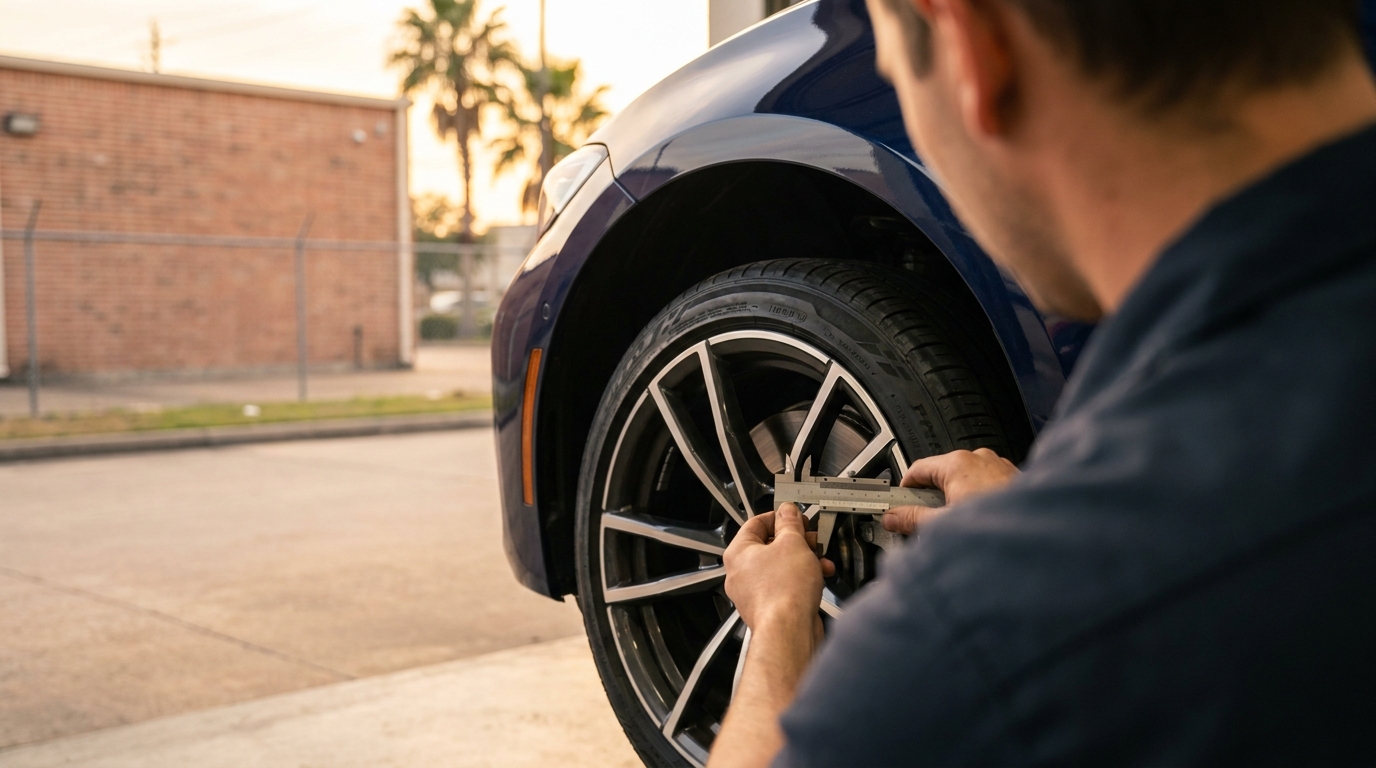
A complete oil change for a Houston-driven vehicle is more than draining and refilling. It should include the correct manufacturer-approved full synthetic oil at the specified viscosity, a new OE-grade oil filter, a new drain plug crush washer where applicable, a reset of the in-dash service reminder, and a multi-point inspection covering items that fail faster in Gulf Coast conditions.
- Coolant condition and level — heat cycling degrades coolant faster here
- Battery load test — Houston heat is harder on 12V batteries than northern cold, and average battery life in Gulf Coast markets runs roughly 3 years
- Cabin and engine air filters — pollen, construction dust, and humidity load these quickly
- Tire condition and pressure — hot pavement accelerates tread wear on the outer shoulders
- Wiper blades — UV and heat break down rubber long before the blade actually wears out
- Brake fluid moisture content — humid climates raise fluid moisture faster, dropping the boiling point
How much should an oil change cost in Houston in 2026?
Expect roughly $70–$130 for a full synthetic oil change on a standard gasoline passenger car in the Houston market, and $110–$180 for European vehicles requiring manufacturer-approved specs like VW 502.00 or 508.00. Diesel TDI service typically runs higher due to larger oil capacity and specialized filters. Prices vary by engine, oil capacity, and any service specials in effect.
The larger cost, if you skip intervals, is engine wear — timing chain tensioners, turbochargers, and VVT solenoids on modern engines are all sensitive to oil condition. A $100 service on time is materially cheaper than a $2,500 timing chain job at 90,000 miles.
Frequently asked questions
Does Houston traffic really count as severe service?
Yes. Most manufacturers, including Volkswagen, define severe service to include extended idling, stop-and-go driving in hot weather, frequent short trips under about 10 miles, and sustained ambient temperatures above 90°F. Daily commuting on I-10, US-290, or the 610 Loop in Houston checks nearly every box. If your commute involves any of those conditions, use the severe-service interval, not the normal one.
Can I still go 10,000 miles between oil changes if I use full synthetic?
Only if your driving genuinely qualifies as normal service — mostly steady highway miles in moderate temperatures, minimal idling, and few short trips. That describes very few Houston drivers. Full synthetic oil is more heat-stable than conventional, but it still oxidizes, still gets diluted by fuel on short trips, and still accumulates moisture. In Houston, 5,000 miles is the safer target regardless of oil type.
Does the oil change interval change in summer?
Effectively yes, because the severe-service conditions intensify. From roughly late May through September, sustained 90°F+ heat and afternoon idling in traffic push oil temperatures higher and shorten useful oil life. Many Houston drivers time one oil change in late spring, before summer humidity peaks, and another in early fall to reset the oil going into and out of the hardest driving months.
Do I have to service my Volkswagen at a Volkswagen dealer?
No — the federal Magnuson-Moss Warranty Act prevents a manufacturer from voiding your warranty simply because you serviced elsewhere, as long as the correct parts and specifications are used. The practical advantage of a Volkswagen dealership is that the correct VW-approved oil, OE filters, torque specs, and service reminder resets are standard, and any open recalls or software updates can be handled in the same visit.
How do I know if my oil actually needs changing sooner?
Check the dipstick monthly. Fresh oil is amber and translucent; oil at the end of its life is dark brown to black and feels thinner or gritty between your fingers. A burnt smell, a dashboard oil service reminder, or a ticking sound at cold start are all signs to service sooner. Cars driven inside the Loop or on heavy commutes almost always need service before the mileage suggests.
Does Volkswagen Cypress service non-Volkswagen vehicles for oil changes?
Yes. The Volkswagen Cypress service department performs oil changes on most makes and models, not only Volkswagens, and serves customers across the northwest Houston metro including Cypress, Katy, Tomball, Jersey Village, Copperfield, and the Cy-Fair area. The advantage on non-VW vehicles is the same: manufacturer-spec oil, trained technicians, and a full multi-point inspection rather than a drive-through service.
The bottom line for Houston drivers
Houston's climate and traffic quietly rewrite the maintenance schedule printed in your owner's manual. Treat your car as severe-service, plan on a synthetic oil change every 5,000 miles or six months, and pair the service with a real inspection of the components that fail faster in Gulf Coast conditions — battery, coolant, brake fluid, filters.
Drivers in Houston who want this handled by a factory-trained service team can reach Volkswagen Cypress at https://www.vwcypress.com to schedule an oil change or a full service inspection. The service department works on most makes, with Volkswagen-specific expertise for owners of Jetta, Tiguan, Atlas, Atlas Cross Sport, Taos, ID.4, and GTI models across the Cypress, Katy, Tomball, and northwest Houston area.