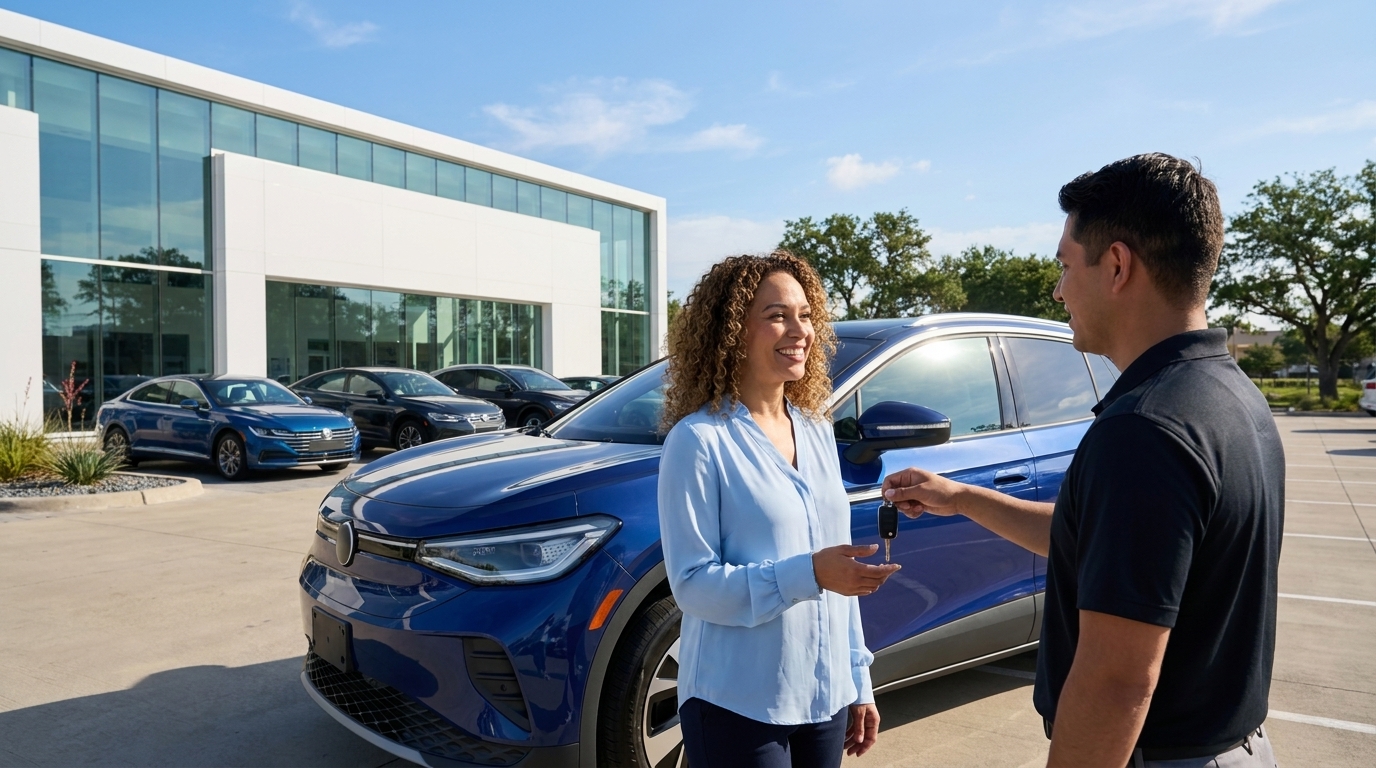
How to Trade In Your Car at a Houston, TX Dealership
See how Houston dealerships actually appraise trade-ins in 2026 — the mechanics of mileage, condition, Texas tax rules, and what drives your final offer.
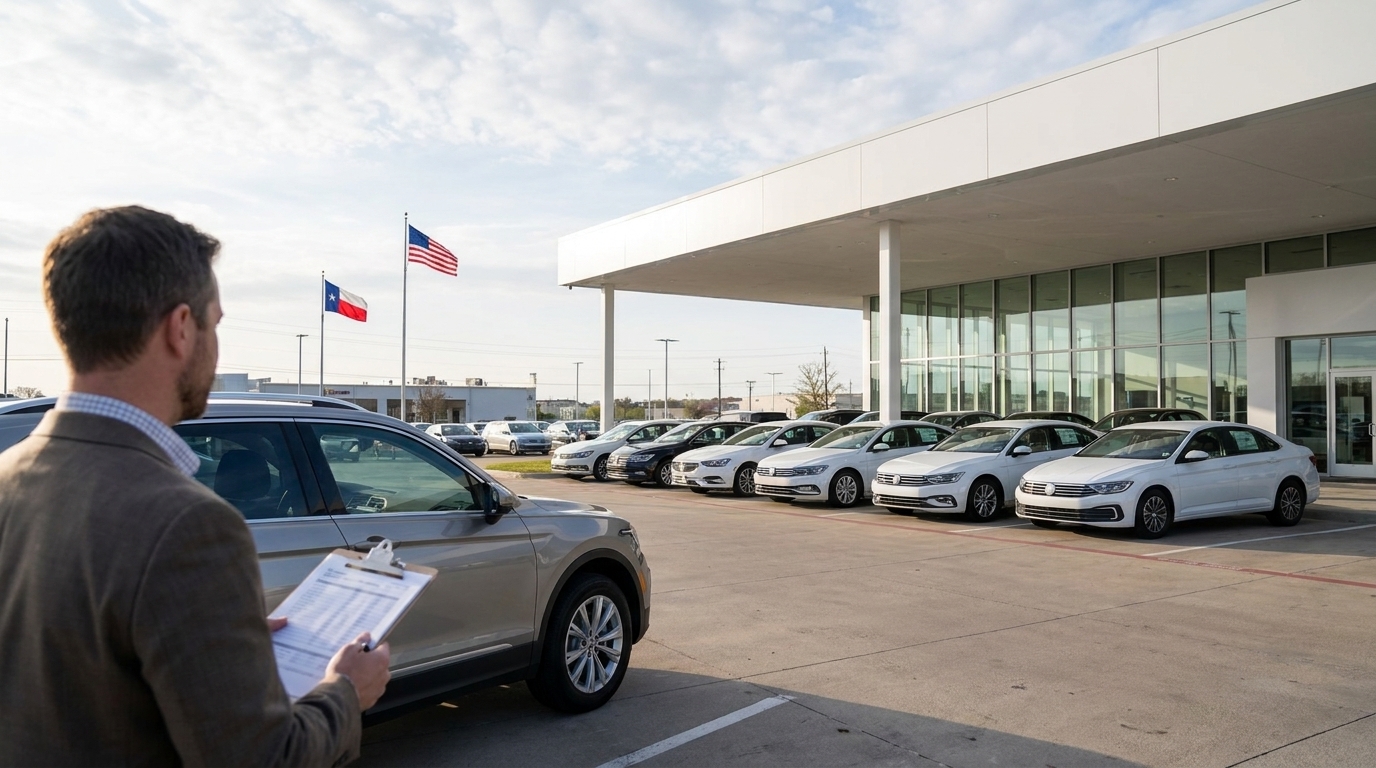
Trading in your car at a Houston dealership works in five mechanical steps: the dealer identifies the vehicle (VIN, title, mileage, history), physically inspects it, benchmarks it against auction and retail data, subtracts reconditioning and resale risk to build an offer, and then applies that allowance against the new vehicle's price — reducing the Texas 6.25% sales tax base to the net difference. Understanding each step is how you spot a fair number and negotiate the rest.
The Houston market has its own quirks. Flood exposure, brutal summer heat, long commutes across a sprawling metro, and a strong appetite for trucks and SUVs all move the needle on what your car is actually worth here versus what a national valuation tool suggests. This guide walks through the mechanism the way appraisers see it.
What actually happens during a Houston dealer appraisal?
A Houston dealer appraisal is a five-part process: vehicle identification (VIN, title status, mileage, trim, ownership and accident history, lien payoff), a physical inspection of body, interior, tires, glass, mechanicals and underbody, a market valuation against auction results and current listings, an offer calculation that subtracts reconditioning and dealer margin, and a transaction reconciliation that verifies title and applies the trade allowance to your new purchase.
The appraiser is not trying to match a retail listing price. They are calculating what the car will bring at wholesale or resale after transport, repairs, inspection, warranty risk, auction fees, and margin. That gap is why an online "trade value" estimate and a real written offer rarely match to the dollar.
How do Houston appraisers actually value mileage and condition?
Appraisers weight mileage against age (a Houston commuter car often runs above national average because of long drives across Harris, Fort Bend, and Montgomery counties), then apply condition deductions for tires, glass, paint, interior wear, warning lights, and any evidence of water or storm damage. Reconditioning cost is a direct subtraction — every scuff, bald tire, or weak A/C compressor becomes a line item against your offer.
Houston-specific factors get real scrutiny. Faded paint and cracked dashboards from UV exposure, weak batteries, A/C defects, and any hint of flood exposure — damp carpet, waterlines, corroded connectors — can push a car from clean to rough in the appraiser's grading. A branded flood title can make the vehicle unsuitable for normal retail resale entirely.
Volkswagen Cypress, located at 11411 Farm to Market 1960 Road West in northwest Houston, sees the mileage effect play out constantly: cars driven daily from Cypress, Katy, and Tomball into the Energy Corridor or downtown accumulate miles fast, and appraisers price accordingly.
How does market demand change what your car is worth here?
Houston's geography drives demand toward pickups, three-row SUVs, and fuel-efficient crossovers with strong A/C and durable tires. Vehicles with strong wholesale liquidity — popular trucks, mainstream SUVs, and well-documented late-model cars — receive more competitive offers than slow-moving configurations, high-mileage luxury sedans, or heavily modified vehicles that a dealer can't easily resell.
The metro area ranked fourth among the ten most populous U.S. metros for daily vehicle miles traveled per capita at roughly 27.6 miles per person per day, and 2026 commute times averaged 33.7 minutes in Fort Bend County, 29.3 in Harris County, and 32.5 in Montgomery County. That travel intensity sustains demand for reliable daily drivers — and it is why a clean, well-maintained crossover with two keys and full service records tends to appraise stronger here than in slower markets.
What are realistic trade-in ranges in Houston in 2026?
Reported Houston-area figures are useful as broad benchmarks, not guaranteed offers. A 2–3-year-old mainstream compact or midsize SUV with a local retail value near $25,000–$30,000 has commonly drawn trade offers around $20,000–$26,000. A late-model full-size or luxury SUV retailing around $50,000–$65,000 has drawn offers around $45,000–$58,000. One cited example placed a 2026 Nissan Armada Platinum's trade value near $56,100 against a resale value near $61,300.
Context matters. Houston-area advertised prices for late-model mainstream compact and midsize SUVs were reported at roughly $22,997–$31,513, and national used-vehicle listing prices reached about $27,239 in 2026 — up 7% year over year. Replacement-cost inflation is still real, which is part of why holding your trade to a strong offer matters more than it did a few years ago.
| Vehicle Category | Houston Retail Range | Reported Trade-In Range |
|---|---|---|
| 2–3 yr old mainstream compact/midsize SUV | $25,000–$30,000 | $20,000–$26,000 |
| Late-model full-size or luxury SUV | $50,000–$65,000 | $45,000–$58,000 |
| Late-model mainstream SUV (advertised) | $22,997–$31,513 | Varies by condition/mileage |
| National used listing average (2026) | ~$27,239 | Benchmark only |
How does Texas sales tax change the math on a Houston trade-in?
Texas imposes a 6.25% motor-vehicle sales tax, and when you trade a vehicle in as part of a qualifying purchase, the trade allowance generally reduces the taxable sales price. Tax is calculated on the net difference between the new vehicle's price and the trade allowance — not the full price of the replacement vehicle. That structural benefit is why a dealer trade often nets out ahead of a private sale even at a lower headline number.
The math is simple. On a $35,000 replacement vehicle with a $20,000 documented trade allowance, the taxable base is $15,000. At 6.25%, that produces $937.50 in tax before other transaction items — versus tax on the full $35,000 if you bought without a trade. Sell privately and buy separately, and you lose that offset entirely.
What documents and steps close the deal at a Houston dealership?
You'll need the certificate of title (or electronic title information), a government-issued ID, current registration, lienholder and payoff information if the vehicle is financed, all keys and remotes, and service records. The dealer verifies title and lien payoff, applies the agreed trade allowance to the buyer's order, and calculates sales tax on the net taxable amount. Texas dealer documentation fees are commonly described as capped at $150 in current consumer guidance.
Texas motor-vehicle dealers are regulated and licensed by the Texas Department of Motor Vehicles (TxDMV). Ask for a written buyer's order that clearly separates the documentation fee, tax, title, registration, payoff, and trade allowance — that's the document you use to verify every number lines up with what you were quoted.
When is the best time of year to trade in a car in Houston?
There isn't one universally best month. Late spring and summer tend to strengthen demand for pickups, SUVs, and road-trip-ready vehicles, and Houston's heat makes A/C performance, battery condition, and tire wear more important in the inspection. Autumn and year-end bring model-year changeovers, manufacturer incentives, and dealer inventory targets that can shift acquisition appetite. Hurricane season adds volatility to supply and title scrutiny.
Timing usually matters less than vehicle-specific factors — segment, mileage, condition, and whether the dealer needs your exact configuration on their lot. A clean crossover in July often outperforms a rough one in November, regardless of the calendar.
Frequently asked questions
How do I get the most accurate trade-in value for my car in Houston?
Get multiple written offers, bring clean maintenance records and both sets of keys, address obvious cosmetic issues before the appraisal, and validate any online estimate against your actual VIN, mileage, and trim. Houston-specific factors like flood history and A/C performance matter more here than in most markets — a documented service record on those systems directly supports a stronger appraisal.
Does a Houston dealer have to accept my trade-in?
No. A dealer can decline any trade if the vehicle doesn't fit their retail profile, carries a branded title, needs reconditioning beyond what makes economic sense, or shows evidence of flood or major storm damage. If your vehicle is declined, the dealer may still refer it to auction or offer a wholesale-level number that reflects the resale risk they'd absorb.
How does Texas sales tax work when I trade in a car?
Texas charges 6.25% motor-vehicle sales tax on the net taxable amount after a qualifying trade-in allowance is subtracted from the new vehicle's price. On a $35,000 vehicle with a $20,000 trade allowance, tax is calculated on the $15,000 difference, producing $937.50 before other items. Selling privately and buying separately means paying tax on the full purchase price.
Should I pay off my car before trading it in?
No — you don't need to pay it off first. The dealer handles the lien payoff directly with your lender as part of the transaction, using the trade allowance to cover the balance. If your trade value exceeds the payoff, the difference reduces your new vehicle's price. If the payoff exceeds the trade value, the negative equity is typically rolled into the new financing.
Is trading in better than selling privately in Houston?
It depends on the net economic result, not the headline numbers. Private sales usually produce a higher gross price but no sales-tax offset, plus time, listing costs, buyer no-shows, and payment risk. A dealer trade produces a lower gross but reduces your Texas 6.25% tax base and closes in a single transaction. Compare the two on total after-tax dollars, not sticker-to-sticker.
What paperwork do I need to trade in a car at a Houston dealership?
Bring the certificate of title or electronic title information, a government-issued photo ID, current registration, lienholder and payoff details if the vehicle is financed, all keys and remotes, and service records if you have them. Joint owners typically both need to sign. If the vehicle recently moved into Texas or has a branded title, expect additional title-transfer steps handled by the dealer.
The bottom line
A Houston trade-in isn't a mystery — it's a mechanical process of identification, inspection, market benchmarking, and math. Once you understand how appraisers weigh mileage against Houston's commute reality, how condition deductions accumulate, how the 6.25% Texas tax offset changes the net, and what the current benchmark ranges actually look like, you can walk into any appraisal with a clear read on whether the offer is fair.
Readers in Houston who want the process handled straightforwardly can reach Volkswagen Cypress at 11411 Farm to Market 1960 Road West, Houston, TX 77065, by phone at (281) 532-8824, or online at https://www.vwcypress.com. The dealership holds a 4.4-star rating across 3,756 Google reviews as of April 2026, with customers frequently noting the no-pressure sales approach — a useful trait when you're weighing a trade offer and want time to think through the numbers.