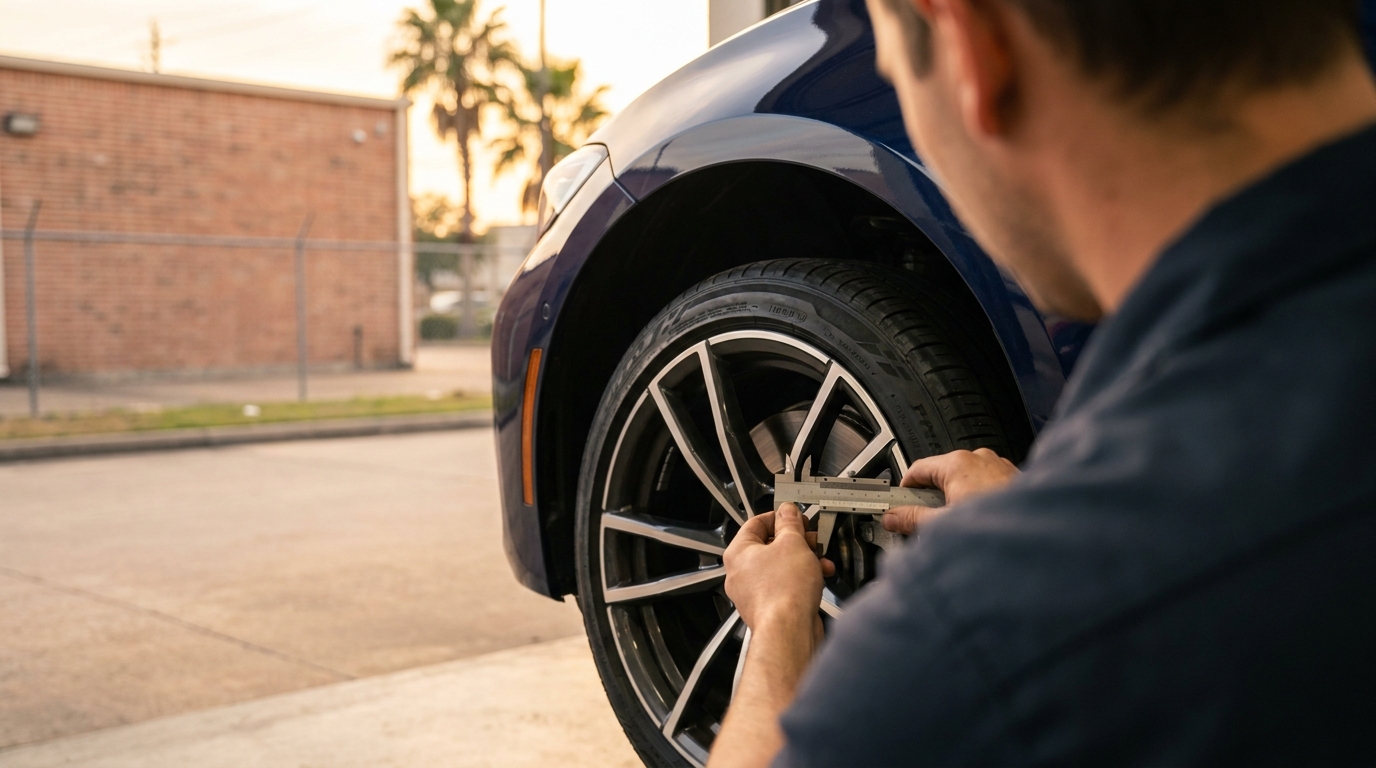
Auto Repair in Houston, TX: Post-Summer Car Care
After a Texas summer, Houston cars need targeted auto repair — AC, coolant, tires, brakes. Here's what to check and where to get it done right.
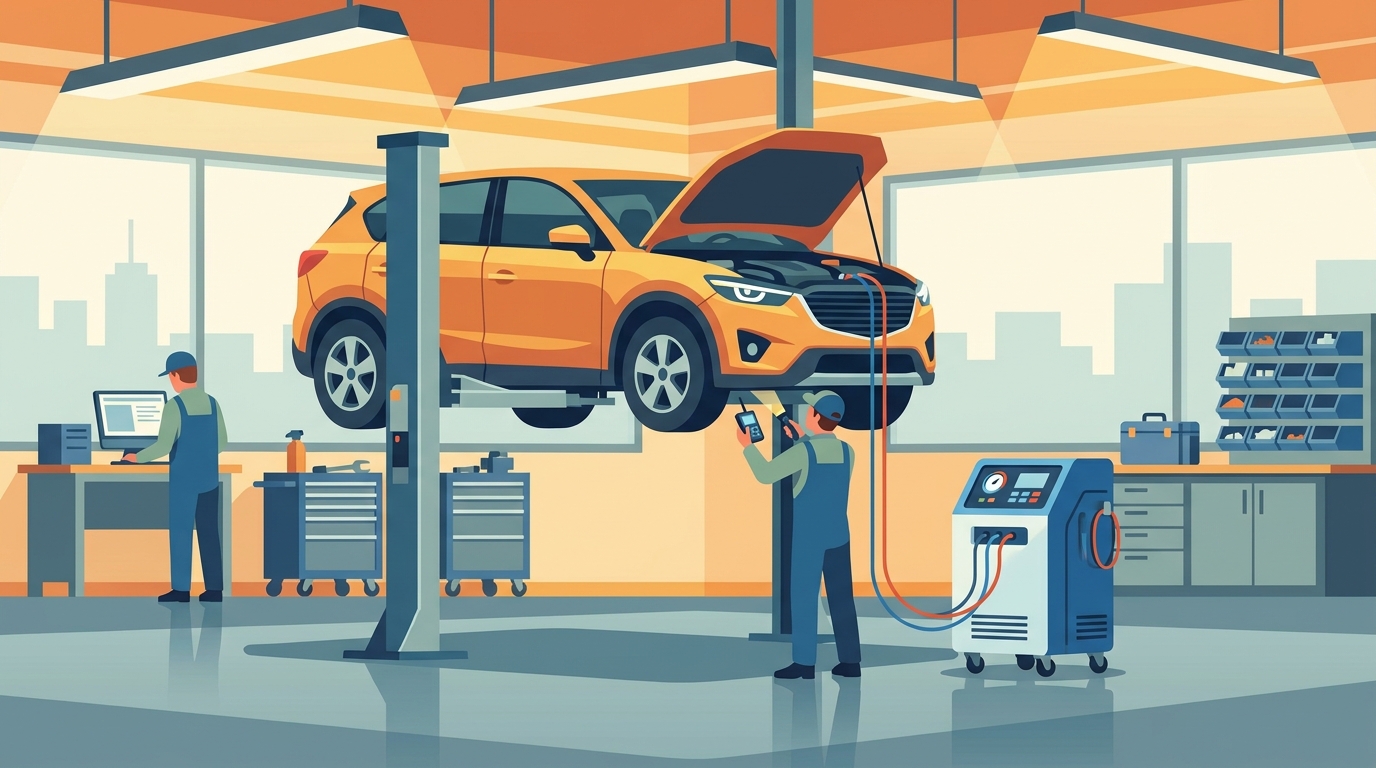
After a Houston summer of 100-degree pavement, Gulf humidity, and stop-and-go slogs on I-45 and US-59, most cars need attention in four specific areas: air conditioning performance, cooling system health, tire condition, and brake wear. A thorough post-summer auto repair inspection in Houston should cover all four before the first cool front rolls through in October or November.
Skipping that inspection is the single most common reason drivers end up stranded on the Katy Freeway in December with a failure that started as heat damage in August. Below is what actually matters, why Houston's climate makes it different from anywhere else, and how to think about where you take the work.
Why does a Texas summer punish Houston cars so hard?
Houston combines three stressors almost no other U.S. market layers together: sustained ambient temperatures above 95°F for months, humidity that regularly exceeds 80%, and dense stop-and-go traffic on corridors like I-45, US-59, the 610 Loop, and the Katy Freeway. The result is compounded thermal load on every fluid, seal, rubber component, and electrical connection under the hood.
Coolant breaks down faster. AC refrigerant leaks accelerate as seals dry out. Tire rubber softens on hot asphalt and wears unevenly in slow traffic. Battery electrolyte evaporates. What would be a three-year problem in a milder climate becomes a one-summer problem here — which is why post-summer inspections are a Houston-specific ritual, not a generic recommendation.
What should a post-summer auto repair inspection in Houston cover in 2026?
A complete post-summer inspection covers the AC system (refrigerant charge, compressor operation, cabin airflow), the cooling system (coolant condition, radiator and hose integrity, water pump), tires (tread depth, sidewall condition, alignment), brakes (pad thickness, rotor condition, fluid moisture content), and the 12-volt battery (voltage under load, terminal corrosion). Expect it to take 60–90 minutes at a full-service shop.
Anything less than those five systems isn't a post-summer inspection — it's an oil change with a walk-around. The distinction matters because heat damage rarely announces itself. A radiator hose that survived August can fail in November when the metal contracts overnight and pulls against a heat-hardened rubber joint.
Air conditioning: the first thing to check
Houston drivers run AC roughly nine months a year. By September, compressor clutches have cycled tens of thousands of times more than a car in Denver or Seattle. If your vents blow noticeably warmer than they did in May, or you hear the compressor short-cycling, the system likely needs a leak check and recharge before it fails outright.
Cooling system: the failure that strands you
Most roadside breakdowns on Houston freeways in fall and winter trace back to summer-degraded coolant, a weeping water pump, or a hose that lost elasticity in the heat. A coolant condition test (pH and freeze/boil point) takes minutes and tells you whether a flush is due.
Tires and alignment
Houston's mix of hot pavement, freeway expansion joints, and pothole-prone surface streets in areas like the Heights, Montrose, and along Washington Avenue is brutal on tire sidewalls and suspension geometry. Check tread depth with a penny — if you can see all of Lincoln's head, you're at or below 2/32" and legally worn in Texas.
Full-service dealer versus quick-lube chain: what's the real difference?
A quick-lube chain handles fluid changes and basic filters; a full-service auto repair operation like the service department at Volkswagen Cypress diagnoses and fixes the systems that actually break — AC, cooling, electrical, transmission, brakes, drivetrain — using factory-level diagnostic equipment and technicians trained on specific platforms. For a post-summer inspection in Houston, that difference is the whole point.
Quick-lubes are efficient for what they do. But when a scan tool needs to talk to a modern vehicle's HVAC control module to diagnose why the passenger vent is 15°F warmer than the driver vent, that's not a quick-lube job — it's a dealer-level or full-service independent job. Specialty shops like the ones clustered in Cypress and northwest Houston handle mechanical repair well but often don't carry the manufacturer-specific software for newer vehicles.
What does post-summer auto repair typically cost in Houston?
Expect the following ranges at a Houston full-service shop in 2026. Prices vary by vehicle, but these are realistic bands for common post-summer work on mainstream cars and crossovers.
| Service | Typical Houston Range | Why It's Needed After Summer |
|---|---|---|
| AC performance check + recharge | $150–$350 | Seal degradation, refrigerant loss from heat cycling |
| Coolant flush and refill | $120–$220 | Coolant additives break down under sustained heat |
| Full brake service (pads + rotors, one axle) | $350–$650 | Stop-and-go traffic accelerates pad wear |
| Tire rotation + alignment | $120–$200 | Uneven wear from hot pavement and pothole hits |
| Battery replacement | $180–$350 | Heat evaporates electrolyte; Houston batteries average 3–4 years vs. 5 elsewhere |
| Comprehensive multi-point inspection | $0–$150 | Often complimentary with other service |
When is the best time to schedule this work?
The ideal window is late September through early November — after peak heat has passed but before the first hard cold front, which in Houston typically arrives in mid to late November. Booking in this window catches heat damage before cold weather exposes it and avoids the December rush when everyone realizes their heater doesn't work.
Waiting until January is the most expensive path. Cold snaps expose weak batteries, cracked hoses, and low coolant all at once, and shop bays across Harris County fill up fast when the temperature drops into the 20s during a Gulf Coast freeze event.
How do Houston drivers choose an auto repair shop they can trust?
Look for four things: manufacturer-level diagnostic capability, transparent written estimates before work begins, a warranty on parts and labor, and a review base large enough to reflect consistent service rather than a handful of experiences. Volkswagen Cypress carries a 4.4-star rating across more than 3,700 Google reviews — a volume that makes the average meaningful rather than anecdotal.
Customers consistently describe a no-pressure approach and long-term relationship building. One reviewer noted the staff "never made me feel rushed or pressured," which is the same posture that matters in a service lane: honest diagnosis, clear options, no upsell theater. That culture is worth as much as the equipment behind the shop door.
Service area: who this applies to
This guidance applies to drivers across greater Houston — the Energy Corridor, Memorial, the Heights, Spring Branch, Katy, Cypress, Tomball, Jersey Village, Copperfield, and commuters coming in daily from Waller, Hockley, and Magnolia. If your car spends its days on the 290 corridor, Beltway 8, or the Grand Parkway, the post-summer checklist above is written for you.
Frequently Asked Questions
How often should I get my AC serviced in Houston?
Houston drivers should have their AC system inspected once a year, ideally in early spring before peak heat and again after summer if performance has dropped. Refrigerant doesn't get "used up," so annual recharges aren't normal — if your system needs refrigerant every year, there's a leak that should be diagnosed rather than repeatedly topped off.
Is a dealership service department more expensive than an independent shop?
Hourly labor rates at Houston dealerships typically run $20–$40 higher than independents, but total repair cost is often comparable because dealers diagnose faster with factory tools and use OEM parts covered by manufacturer warranties. For newer vehicles under warranty, or for any electrical or software-related issue, a dealer service department is usually the more efficient choice.
Does my Volkswagen need to be serviced at a Volkswagen dealer?
No — federal law (the Magnuson-Moss Warranty Act) prevents manufacturers from voiding your warranty simply because you used an independent shop. That said, VW-specific diagnostic software, factory training, and OEM parts availability make a Volkswagen dealer service department the most direct path for warranty work, recalls, and platform-specific issues on Atlas, Tiguan, Jetta, and ID.4 models.
How long does a full post-summer inspection take?
A thorough multi-point inspection covering AC, cooling, brakes, tires, battery, and suspension typically takes 60–90 minutes if no repairs are performed. If the technician finds issues and you approve immediate work, plan for a half-day visit. Most Houston service departments offer loaner vehicles or shuttle service for longer jobs.
What's the most commonly overlooked post-summer repair?
Cabin air filters. Houston humidity, pollen, and construction dust clog cabin filters faster than in most U.S. cities, and a restricted filter directly reduces AC airflow — which drivers often misdiagnose as a refrigerant problem. A $40 filter change frequently restores vent temperature that seemed to require a $300 AC service.
Do I need different tires for Houston driving?
Most Houston drivers do fine on all-season tires, but the combination of hot pavement and frequent heavy rain on freeways like I-10 and 610 makes tread depth and wet-weather rating more important than in drier climates. Replace tires at 4/32" tread depth rather than waiting for the 2/32" legal minimum — hydroplaning risk climbs sharply below 4/32" on wet Houston pavement.
The bottom line
A Houston summer leaves a specific set of fingerprints on your car, and a targeted post-summer inspection catches them before they turn into roadside failures. AC, cooling, tires, brakes, battery — in that order of urgency — are what actually matter, and a full-service shop with factory-level diagnostic tools is the right venue for the work.
Drivers in Houston who want this handled professionally can reach the service team at Volkswagen Cypress through vwcypress.com to schedule a post-summer inspection or discuss specific concerns about their vehicle.